

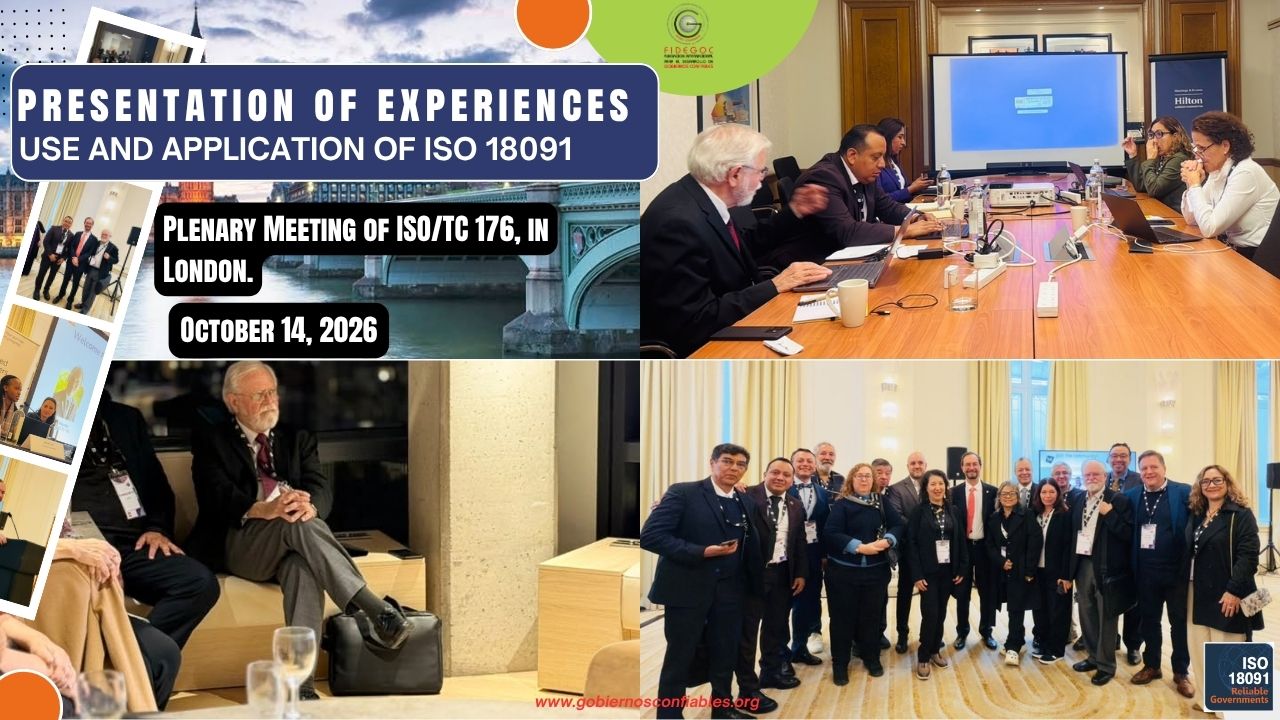
LONDON, UNITED KINGDOM — October 14, 2026 — As part of the proceedings of the Plenary Assembly of the International Technical Committee ISO/TC 176 (Quality Management and Quality Assurance), the World Council For Quality (WCFQ) and Working Group TG05 (New Edition of ISO 18091) held today the international session of the ISO City Labs, a global exchange platform aimed at strengthening innovation, transparency, and compliance with the 17 Sustainable Development Goals (SDGs) in local governments.
The session was coordinated by Dr. Carlos H. Gadsden Carrasco, Honorary Board Member of the WCFQ Council and Convenor of the ISO/TC 176/TG05 working group. The meeting brought together municipal authorities, leaders of planning institutes, academics, citizen observatories, and technical delegates from 15 countries: Mexico, Spain, Peru, United States, Canada, Cuba, Italy, Venezuela, Argentina, Vietnam, Ecuador, Botswana, United Kingdom, Colombia, and the Netherlands.
An International Standard Backed by the WCFQ’s Track Record of Reliability
During the opening of the City Labs, speakers highlighted the historical relevance of the ISO 18091:2019 standard, which has been adopted as a national standard in 57 countries — covering more than 43% of the world’s population — and is mandatory in nations such as India and Panama.
The WCFQ, which for more than two decades has granted international reliability recognition to local governments demonstrating real progress in public quality and innovation, reaffirmed that ISO 18091 is the only comprehensive roadmap of 39 public policies capable of equipping local administrations with a robust management system to operationally implement the United Nations 2030 Agenda.
International Evidence: Cases Presented at the ISO City Labs
Throughout the day, international experts and institutions presented the practical outcomes of applying the standard in their communities:
- Digital Diagnostic Tool CONFÍA (Mexico / International): Presentation of this technological solution that applies artificial intelligence and high-security encryption to immediately diagnose the 39 indicators of ISO 18091.
- Delicias, Chihuahua (Mexico): Lourdes González, director of INPLAN, presented how they linked ISO 18091 with the long-term vision of the “Delicias 2040” territorial plan, transcending three-year government terms through institutionalized indicators.
- Vietnam: Thanh Tung Dang from the Vietnam Directorate for Standards, Metrology and Quality – Quality Training Centre presented progress from pilot programs in provinces such as Hai Phong and the Ba Dinh district, engaging authorities and citizens in traffic-light self-evaluations of public services.
- Italy: Pietro Marcaccio shared insights gained over more than 13 years in Lombardy and the implementation in the municipality of Dalmine, moving from ad-hoc evaluations to a structured dialogue for continuous improvement.
- Los Cabos, Baja California Sur (Mexico): Margarita Díaz, president of the Citizen Observatory OCI Los Cabos, presented the results of 12 consecutive annual evaluations of the municipal administration based on the annexes of the standard, linking local management to the SDGs.
- Botswana: Asha Mam highlighted progress in certification and governance in municipalities such as Francistown City Council and KDC, developed in partnership with the United Nations Development Programme (UNDP).
Strategic Roadmap Approved for the ISO Plenary
With the unanimous backing of the participating countries’ delegation, TG05 and the WCFQ consolidated a 10-point strategic proposal to be submitted for voting at the ISO technical committee plenary session this coming Friday:
- Conceptual evolution: Shift from the concept of “Quality in local government” to “Quality from reliable local governments”, integrating organized civil society and the intergovernmental supply chain.
- Certifiability assessment: Analyze the transformation of ISO 18091 into a Type A standard (with certification requirements) and accredit the participation of citizen observatories alongside WCFQ’s track record of reliability recognition.
- Synergy with the ISO/TS 54001 electoral standard: Evaluate candidates’ proposals with hard data and ISO 18091 indicators prior to elections, and formally monitor their commitments once in office.
- Universal ethical minimum: Incorporate local public policies as ethical expressions aligned with UN human, economic, and social rights.
- Alignment with ISO 53001: Address identified gaps in implementing the 2030 Agenda at the municipal level to accelerate SDG achievement.
- Quadruple Helix approach: Connect government, the productive sector, academia, and organized citizens in governance circles of trust.
- Scientific method and causality: Base budgetary decisions and development plans on empirical evidence and hard indicators.
- Intergovernmental cross-cutting approach: Connect public policies that impact the population horizontally (across departments in the same municipality) and vertically (across municipal, regional, and national levels).
- Artificial Intelligence integration: Leverage emerging technologies to build solid databases and enable real-time monitoring.
- Global Network of ISO City Labs: Promote the creation of at least 5 urban laboratories (City Labs) per country as hubs for learning, experimentation, and good practice transfer.
Toward the Consolidation of the Global Network for Reliable Governance
At the close of the session, Dr. Carlos H. Gadsden emphasized that WCFQ’s permanent mission is to combine technical knowledge with community action to create reliable governments backed by reliable citizens. The international cooperation fostered at the London Plenary lays the foundation for improving people’s quality of life and strengthening the common good globally.
